


Distinguished Microwave Lecturers’ Talks
Monday, 22 January 2024, 8:00am – 11:45am
Organizer: Markus Gardill, Brandenburg University of Technology
RWW and MTT-S is hosting a joint “MTT-S Technical Winter Meeting & RWW DML Special Session” on Monday, 22 January 2024. The new MTT-S Distinguished Microwave Lecturers (DMLs) in the Class of 2024-2026 will present in the session. This session is open to public without requirement on registration.
Maximum Power Transfer Efficiency of MIMO-WPT System
Speaker: Qiaowei Yuan, Tohoku Institute of Technology, Japan
Abstract
This lecture introduces a universal approach for calculating the power transfer efficiency (PTE) and maximum power transfer efficiency (MPTE) of a Multiple Input Multiple Output Wireless Power Transfer (MIMO-WPT) system. The method is applicable to various wireless power coupling techniques and can accommodate any number of transmitters and receivers. The approach, known as E-MIMO, utilizes the Rayleigh quotient and is based on an equivalent M+N ports S-parameters circuit network of the MIMO-WPT system.
The process of computing PTE and MPTE for a MIMO-WPT system will be thoroughly explained in a step-by-step manner, accompanied by numerous practical applications, demonstrating the versatility of the approach. Additionally, the lecture will introduce an essential potential application for array beamforming.
Bio
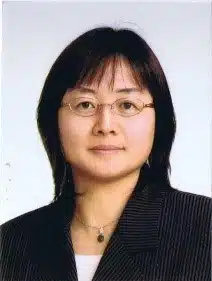 Qiaowei Yuan received her BE, ME, and PhD degrees from Xidian University, Xi’an, China, in 1986, 1989, and 1997, respectively. As a special research student, she studied antenna engineering and numerical methods for electromagnetic wave analysis at Tohoku University, Sendai, Japan, from 1990 to 1991. From 1992 to 1995, she worked at the Sendai Research and Development Laboratory of Matsushita Communication Company, Ltd. From 1997 to 2002, she was at the Sendai Research and Development Center of Oi Electric Company, Ltd., where her work focused on research and design of small antennas for second-generation mobile phones and pager communications.
Between 2002 and 2007, she served as a researcher at the Intelligent Cosmos Research Institute in Sendai, Japan, conducting research on adaptive array antennas and RF circuits for 4G mobile communication. Currently, she holds the position of a full professor at the Tohoku Institute of Technology. Additionally, since September 2021, she has been appointed as a specially appointed professor at Tohoku University, Japan. Dr. Yuan’s most significant achievements lie in adaptive array antenna technologies, Direction of Arrival (DOA) estimation technologies, and optimal design for transmitting and receiving elements in wireless power transfer (WPT) technology. Her expertise in numerical analysis approaches for electromagnetic waves and RF measurement techniques has been instrumental in her research.
Furthermore, she has co-authored three books on antenna engineering and WPT technologies. Dr. Yuan has received several prestigious awards, including the Best Paper Award and Zenichi Kiyasu Award in 2009 from the Institute of Electronics, Information, and Communication Engineers (IEICE) of Japan. She was also honored with the Achievement Award from IEICE in 2014, two Achievement Awards from IEICE Technical Committee on Wireless Power Transfer in 2015 and 2016, respectively, and one Achievement Award from the Technical Committee on Antenna Propagation Committee in 2020.
Throughout her career, Dr. Yuan has actively contributed to professional organizations. She served as the secretary of the IEICE Technical Committee on Wireless Power Transfer of Japan from 2012 to 2014, as well as the vice-chair of IEEE Sendai Women in Engineering (WIE) from 2017 to 2018, and later became the chair of IEEE Sendai WIE from 2019 to 2020. In addition, she held the position of an IEEE R10 WIE committee member from 2021 to 2022. Presently, she is a member of IEEE MTT-C25 and IEEE MTT-S Diversity and Inclusive Committee (2023-2025). She also holds the role of Vice Chair of IEICE AP Technical Committee for the period 2023-2025.
Additive Manufacturing: Emerging Opportunities for Microwave Components
Speaker: Cristiano Tomassoni, University of Perugia, Italy
Abstract
The Additive Manufacturing (AM) technology, also known as 3D-printing technology, offers several interesting and attractive features, including fast prototyping, geometry flexibility, easily customizable products, and low cost (in some cases). However, using such technologies for microwave devices is not straightforward as AM has not been specifically developed for microwave components, and in most cases, some adaptation and post-processing is necessary. Furthermore, there are many AM technologies available, and it is important to understand their characteristics before selecting one.
In the presentation, an overview of the different AM technologies available will be provided. Additionally, an analysis of some of the most common AM technologies used for the manufacturing of microwave components will be conducted in more detail, with the help of several examples. Several microwave components manufactured with some of the most popular AM technologies will be shown, along with a detailed description of the manufacturing process, post-processing, and all actions necessary to make the component perform well. Furthermore, it will be shown how the flexibility of this technology allows the development of new classes of components with non-conventional geometries that can be exploited to obtain high-performing components in terms of compactness, weight, losses, etc.
Bio
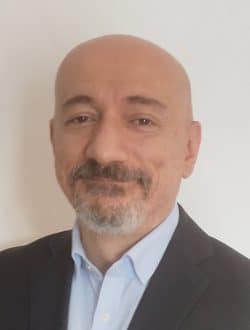 Cristiano Tomassoni received his Ph.D. in Electronics Engineering from the University of Perugia, Perugia, Italy, in 1999. In the same year, he joined the Lehrstuhl für Hochfrequenztechnik, Technical University of Munich, Munich, Germany as a Visiting Scientist, where he worked on the modeling of waveguide structures and devices using the generalized scattering matrix technique. In 2001, he was a Guest Professor at the Fakultät für Elektrotechnik und Informationstechnik, Otto-von-Guericke University, Magdeburg, Germany. In the early stages of his career, he contributed to the enhancement of several analytical and numerical methods for electromagnetic component simulation, including the finite-element method, mode-matching technique, generalized multipole technique, method of moments, transmission-line matrix, and mode matching applied to spherical waves. In 2001, he joined the University of Perugia, where he is currently an Associate Professor and teaches the ‘Electromagnetic Fields’ course and the ‘Advanced Design of Microwave and RF Systems’ course. His main research interests include modeling and designing of waveguide components and antennas, miniaturized filters, reconfigurable filters, dielectric filters, and substrate integrated waveguide filters. He is currently studying the use of Additive Manufacturing (AM) technology for the fabrication of microwave components, considering various technologies such as Stereolithography (SLA), Lithography-based Ceramic Manufacturing (LCM), Selective Laser Melting (SLM), Fused Deposition Modeling (FDM), and PolyJet technology.
Prof. Tomassoni is the Vice-Chair of the MTT-5 Filters Technical Committee of the IEEE-MTT society. He also served as an Associate Editor for IEEE Transactions on Microwave Theory and Techniques from 2018 to 2022. Prof. Tomassoni is the recipient of the 2012 Microwave Prize presented by the IEEE Microwave Theory and Technique Society.
100-300 GHz Wireless Communications
Speaker: Mark Rodwell, UCSB, USA
Abstract
100-300 GHz wireless systems can provide very high data rates per
- “Ubiquitous Health Monitoring Using Wearable and Non-contact Sensors”, Negar Tavassolian, Stevens Institute of Technology, USA
signal beam, and, given the short wavelengths, even compact arrays can contain many elements, permitting massive spatial multiplexing for further increased capacity. We will describe the underlying transistor technology, plus IC, antenna, array module, and systems design of 140 GHz massive MIMO wireless hubs and 210 GHz and 280 GHz MIMO backhaul links.
Bio
 Mark Rodwell (Ph.D. Stanford 1988) holds the Doluca Family Endowed Chair in Electrical and Computer Engineering at UCSB. During 2017-2023 he directed the SRC/DARPA ComSenTer Wireless Research Center. His research group develops high-frequency transistors, ICs and communications systems. He received the 1994, 1997, 1998, 2014, 2019, 2021, 2022, and 2023 UCSB electrical engineering teaching awards. He and his collaborators received the 2022 SIA-SRC University Researcher Award, the 2010 IEEE Sarnoff Award, the 2012 Marconi Prize Paper Award, the 1997 IEEE Microwave Prize, the 2009 IEEE IPRM Conference Award, and the 1998 European Microwave Conference Microwave Prize.