

Keynotes

All the Wrong Answers, to Six Decimal Places - Measurement Techniques, Limits, and Pitfalls
Shahriar Shahramian, Bell Laboratories, Nokia
Abstract: Despite the central role of instrumentation in electrical engineering, metrology techniques, and their common pitfalls, are often underemphasized in university curricula. Inaccurate measurements can undermine a researcher's credibility and lead to costly setbacks, potentially amounting to millions of dollars during product development and commercialization. At the same time, instrumentation technologies have advanced rapidly, blurring the boundaries between measurement domains. This progress, however, has introduced new challenges: increasing complexity in measurement setups, abstraction of instrument functions, and limited user experience frequently contribute to misleading or erroneous characterizations.
This talk explores frequency-, time-, and mixed-domain measurements, with particular emphasis on noise figure, phase noise, broadband modulation, sub-THz signal detection, eye-diagram capture, and frequency conversion behavior. These topics will be examined through the lens of diverse instrumentation architectures that enable such measurements ranging from DC to optical characterization. Additionally, we will highlight the precision, accuracy, repeatability, and resolution limits of various instruments to underscore the importance of uncertainty quantification, error bars, and robust fault detection.
Speaker's Bio: Shahriar Shahramian received his Ph.D. degree from the University of Toronto in 2010, where his research focused on mm-wave data converters and transceivers. He joined Bell Laboratories, Nokia, in 2009 and served as Director of the Integrated Circuits & Microsystems Research Lab. His research group focused on the design of next-generation wireless, optical, and sensing systems. Shahriar and his team made seminal contributions to the design and industrialization of mm-wave phased arrays, sub-THz communication links, and high-speed optical devices. His lab also demonstrated high-performance organic- and glass-based packaging technologies enabling unprecedented levels of integration and performance.
Shahriar was elevated to Bell Labs Fellow in 2020. He has served as a subcommittee chair and member of the technical program committees of several IEEE conferences, including the International Solid-State Circuits Conference (ISSCC), the Radio Frequency Integrated Circuits Symposium (RFIC), and the BiCMOS and Compound Semiconductor Integrated Circuits and Technology Symposium (BCICTS). He has also served as a Guest Editor of the IEEE Journal of Solid-State Circuits and is a frequent contributor to IEEE workshops, tutorials, and technical forums. He currently serves as an SSCS Distinguished Lecturer.
Shahriar and his team have received multiple IEEE Best Paper Awards, and he is the recipient of the IEEE MTT-S Young Engineer Award (2020). He was elevated to IEEE Senior Member in 2020 and IEEE Fellow in 2026. Shahriar holds Adjunct Associate Professor appointments at Columbia University and Princeton University, has received multiple teaching awards, and is the founder and host of The Signal Path educational video series (TheSignalPath.com). His freely available, in-depth educational videos span a wide range of electrical engineering and metrology topics and have received more than 12 million views.
Indium Phosphide Terahertz Transistors: Characterization, Modeling and Application to Next-Generation Test and Measurement Systems
Teledyne Scientific Company
Abstract: Transistor technologies with terahertz- (THz) class bandwidths will play an important role in future communication systems that seek to exploit the large available spectrum at high operating frequencies. Indium Phosphide transistor technologies, both heterojunction bipolar (HBT) and high-electron mobility (HEMT), have demonstrated the highest reported transistor power gain cutoff frequencies (fmax). This talk will review the performance and characteristics of THz-bandwidth InP HBT integrated circuit technologies, and the challenges in characterization and modeling of devices at frequencies >100 GHz. Advanced transistor technologies often find early adopters in the test and measurement market. InP HBT technologies are currently used in wide bandwidth frontend ICs for sampling oscilloscopes and as power amplifiers for terahertz varactor sources in vector network analyzer frequency extenders. The availability of moderate power (100’s mW) sources at D-band (110-170 GHz) and G-band (140-220 GHz) is enabling on-wafer characterization techniques (transistor load-pull) that can be used to further validate and refine THz transistor models.
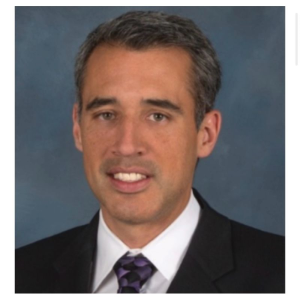
Speaker's Bio: Miguel Urteaga is the director of Foundry Products and Services for Teledyne Scientific Company and manages the advanced device development group. He received his Ph.D. in Electrical Engineering from the University of California Santa Barbara in 2003. Dr. Urteaga’s research has focused on the development of ultra-high speed transistor technologies, primarily in the InP material system. He has led the development of Teledyne’s high performance InP HBT IC technologies. These technologies have been used to demonstrate state-of-the-art integrated circuits ranging from high-speed mixed-signal and digital ICs to mm-wave and THz monolithic integrated circuits. He served as the program manager at Teledyne for the DARPA THz Electronics, Diverse Accessible Heterogeneous Integration (DAHI), Dynamic Range-enhanced Electronics Materials (DREAM) and Electronics for G-band Arrays (ELGAR) programs. Dr. Urteaga is a Fellow of the IEEE and has authored or co-authored over 200 conference and journal publications.